Search This Blog

Tuesday, January 31, 2023

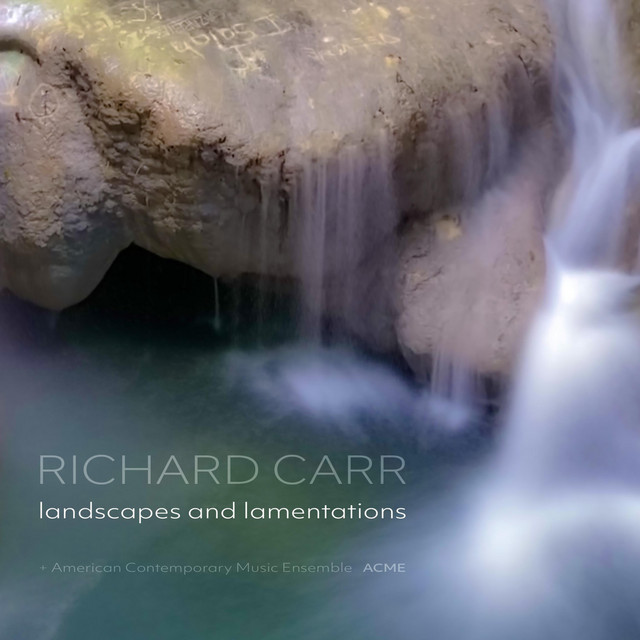
Richard Carr, Landscapes and Lamentations


I covered on these pages an interesting string quartet album by composer-violinist Richard Carr on December 19, 2021. He is back with a new one called Landscapes and Lamentations (Neuma 161). It is a matter of some twelve short and engaging compositions with Carr on violin ion the company of various chamber lineups from the American Contemporary Music Ensemble (ACME).

The works are very well performed and come out of a Pomo Tonal Folksy and even at times a Folk Fiddling sort of immediacy that is easy to appreciate and complex enough not to sound pandering in the least way. The folkishness is not an Americana a la Copeland so much as it is a loosely inventive articulation center with bottom  range drone at times and melody atop, and moreover with a kind of unfolding scalular and pentatonic touchstone that is given a poignant musical brilliance.

The beautiful string motion of "Castle Point" seems like a good focal point of the program with its open fiddling excitement and rhythmic momentum. It perhaps is the very opposite of New Age Music as I have sometimes experienced it--that is it is by no means facile or banal, but rather joyously musical and complex.

So perhaps you never expected you might want to hear this music because how could you know? But then you find it brings pleasure, fulfills a need for deep and new things and so it is a good thing! Happily recommended.


Wednesday, January 25, 2023

Peter Gregson, Quartets


The web blurb says:"This deluxe release follows the success of Quartets 1 & 2 and features the newly released Quartets 3 & 4 from the renowned composer and cellist." 

So officially the two CD set is called Peter Gregson  Quartets One - Four (Deutsche Grammophon DGG 2 CDs).

I'll admit I have been a bit ignorant about the compositions of Peter Gregson until now. Yet as I listen to the nicely wrought performances of these four quartets I feel an easy sympathy with the lyrical unfolding of the composer's own take on Pomo Postmodernism. It is in the mode of Radical Tonality in its ritual sort of chant-like unfolding, the sensuous play of mostly strings in their performative currency, an ambient set of soundscape strengths not simplistic so much as engaged in superconsonantality as it were.

All four quartets have nicely turned content and a sort of cosmic consolative that one might well appreciate in the turbulent times we live through. After a long sitting and intense listening I do want to jump back to a Bartok Quartet say, or Elliot Carter for some spicy and tangy dissonances, or Haydn for inventive and structural brilliance. But that is a  given with my ears after a Pomo soak in a musical sweathouse so to speak.

This is ravishing and well paced music that brings a peaceful ruminency to our musical brown studies, for that it cannot be bettered so much as changed. And when you think of the places that Terry Riley went with his music in time, Gregson takes over the wheel on this ride, as it were,  and steers it all further afield to places adjacent but some distance on to a new spiral ascent, perhaps.

If you want to hear substantial yet relaxing sounds, here is a nice place to be. Well done.

Tuesday, January 24, 2023

Hans Thomalla, Dark Spring, New Music Opera Today


Opera in the New Music zone can be an economically precarious venture and so relatively rare in the main. But of course when it is good we simply must pay it some definite mind, or so I think. I've covered some wonderful ones on these pages, check in the search box for them. And though I am a little late covering this one today, it is another one we need to study and appreciate, to my mind.

Hans Thomalla's opera Dark Spring (OEHMS Classical OC994 2CDs) clocks in at about 90 minutes. It premiered in 2020. Happily the recorded version has been out for a time and I have had the good fortune to have received a copy for listening. It is "Postmodern" in its tonality and post-Romantic songish presence, with some repetition but not much. Interestingly the relative reticence makes its use all the more powerful. 

It is about four students in the grip of an extraordinary amount of stress, in the battle to achieve academically in a highly competitive world, and so too in this world to perform romantically-sexually in the same circumstances. The emphasis is on the character's experience of the feelings such situations entail. Stagnation against the extreme difficulty of self-realization in this world causes all four characters to grapple continually with the uneasy feelings that result. In this way we have a sort of deep psychology of things here, movingly so. Opportunity feels more like importunity and despair. To proceed at times with an attitude yet without a set of encouraging beliefs does little to ameliorate the strain of intense striving, and in the thick of it all, things build to expressive monotony and self or other-directed aggression.

We go to school so that we might be examined, goes one of the libretto musings, and that is what it all is about, competition for its own sake largely, and so there arises stress as a divider, a separation, a marking off, a denial of access.

The opera invites and then rewards your attentiveness with something that feels unique and original, that wears easy on the ears over time with ritualistic and lyrically tense then lax states that rivet you with great strength through a music far from the simplistic excesses of some of the lesser Minimalism in the last few decades. 

It is characterized by a fine sense of inventiveness throughout, nothing banal here! The cast of singers Shachar Lavi, Anna Hybiner, Christopher Diffey and Magid El-Bushra give the English libretto a passionate yet uber-musical reading while the Nationaltheater-Orchestrer under Alan Pierson give us a very winning first performance that satisfies and brings it all into our orbit with grace and charm. A hearty molto-bravo I give this without hesitation, It may well be a new masterpiece in opera today, one of the really original and captivating things I have heard in the last few years.
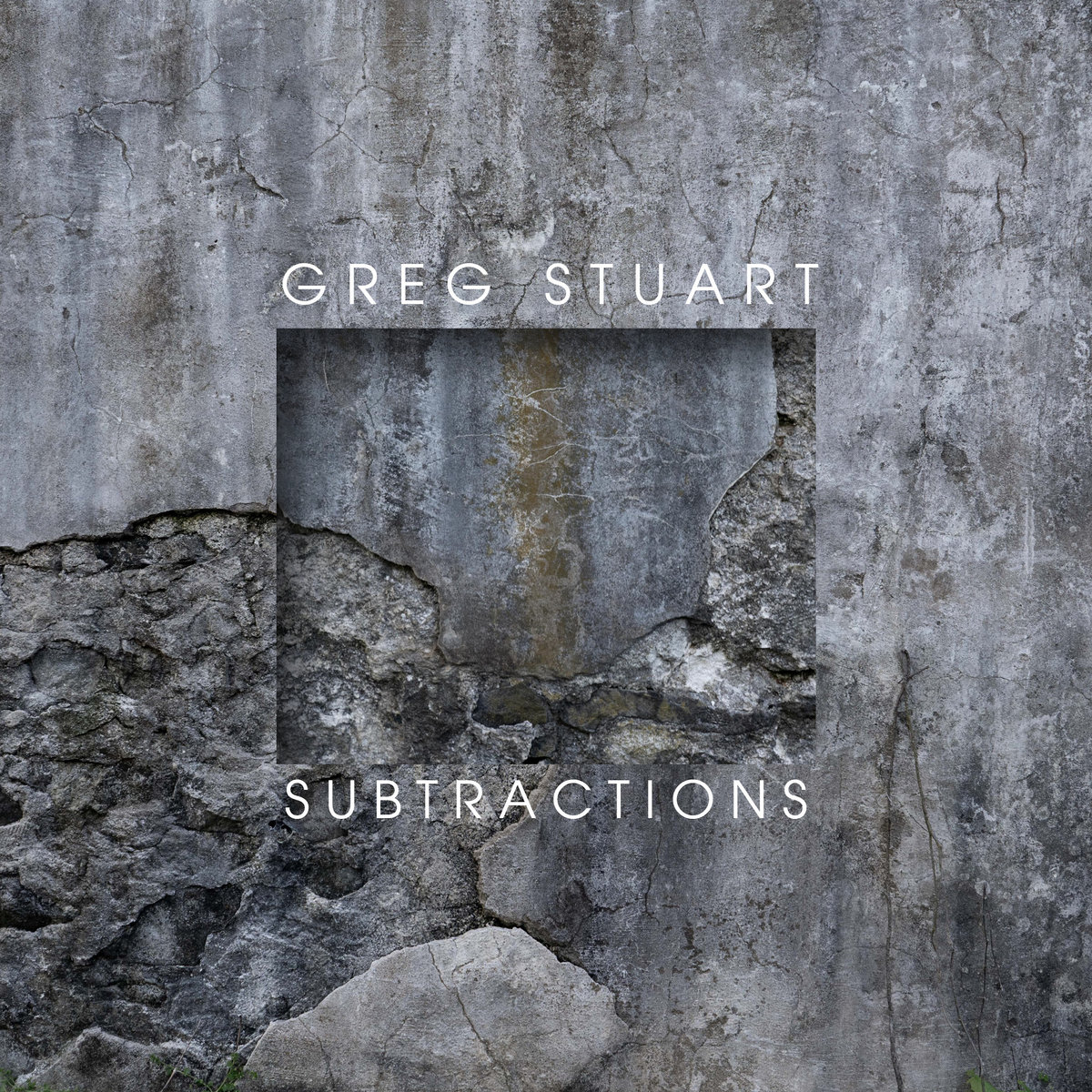
Greg Stuart, Subtractions


Music for a solo percussionist was a part of the legacy of 20th century uber Modernism. It was John Cage, Lou Harrison, Edgard Varese and Karlheinz Stockhausen we can thank, among a few others, and it has changed the idea of instrumentality to include now the extraordinary potential of the language of nonpitched sound color.

As if to fill us in for some of where the percussive New Music arts are now we have Subtractions (New Focus Recordings FCR 348) by Greg Stuart. It gives us some very intensively probing compositions, some two, that further define the possible sound universe in engaging ways.

The most satisfying is perhaps "Border Loss" (2021) by Sarah Hennies. The work concentrates on a recurring universe of combinatory logic from specific percussion objects and the manner in which they are struck, a kind of free falling, tumbling expressive panorama of testificatory fullness. Happily to it reminds of some exemplary early Free Jazz drumming, such as the classic duet by Sonny Morgan and Miford Graves, Percussion Ensemble (1966). There is like on that recording a barrage of recurring sound family identities. It then kicks into a higher intensity explosion that nicely takes it all into higher orbit in virtuoso post pitching that gives us the Space Age as we might dream of it. In the final thrust of the music we get an all over continuous smear of sound that we do not expect to hear in such a context, yet then it alerts us to how much sound a physical battery such as this might produce in imaginative compositional minds and ready-to-hand performatives. This is a real tour de force that anyone interested in the New Music percussion world should contemplate by deep listening.

From there we get a two-movement work entitled "Side By Side" ( 2021) as composed by Michael Pisaro-Liu. We revel in extended techniques of sounding a drum, in setting an initial set of tones in provocative ways, and then on to another continuous soundscape of rubbing drum sounds that gradually acquire exploratory pitch center drones that surprise and beguile in time. Mallet driven cymbal-gong sustains then enter into the wash and thicken the timbral construct even further.

From there the second movement starts with vibraphone long notes that refresh and set up another sonic micro-orchestration that is nice to hear of not exactly world shattering. Yet in does land us suitably after a height scaling percussion deluge. 

But in the end the first half of the program makes it all worthwhile. So surely give this a listen and get a good feel for what can be happening in percussive advances. Bravo Greg Stuart for his brilliant performing self, and composers Sarah Hennies and Michael Pisaro-Liu for their often bold sorties into where we are. Recommended.

Monday, January 23, 2023

Roger Eno, The Turning Year


Roger Eno steps forward with this, a well-paced solo album of compositions and performances of his works new and older, It is titled The Turning Year  (Deutsche Grammophon 486  2024). The main portion of the album features Roger's piano. Some tracks nicely add the string ensemble Scoring Berlin, for string ensemble moments and in  tandem with Roger's piano. Within this melange there are some truly ravishing sequences that if you are like me open your musical wave lengths to dreamy soundscapes that can bring poetic nocturnal musings and feelings. Alternately there are some whose more tightly coiled repetitions have the mesmeric effect of a dance of magical spinning note dervishes that nevertheless remain succinct for a balanced program. Ultimately you get a nicely flowing cornucopia of well aligned musical steady-states. 

The music does not exactly undergo development in the old sort of classicism of a Papa Haydn so much as it evolves a bit in time as you listen.. It sometimes flows with an almost singer-songwriter pianism, though perhaps more unfolding in one flow than sectioning in a song form layout. It works in any case.

It is the sort of music you might put on for anybody and they would no doubt not object to it, in its mellifluous sonics that have an appeal that might attract more pedestrian ears as well as discerning Modernists, but so what of it? Perhaps one  should applaud the accessibility of such things, knowing of course it is one kettle of fish and not the entire catch of the sea in the end,.The slow and at times statuesque poetics from strings and piano bring in a cinematic dreamspell not quite typical of anything else, so all good to my mind.

Pastoral poetics that unfold in a sensuous carpet of harmo-homophony? Yes, and who says we should not be allowed such recreational holidecks of festive sound? I recommend this if you need to take your ears on a little fishing and re-creation trip. Bravo this.

Tuesday, January 17, 2023

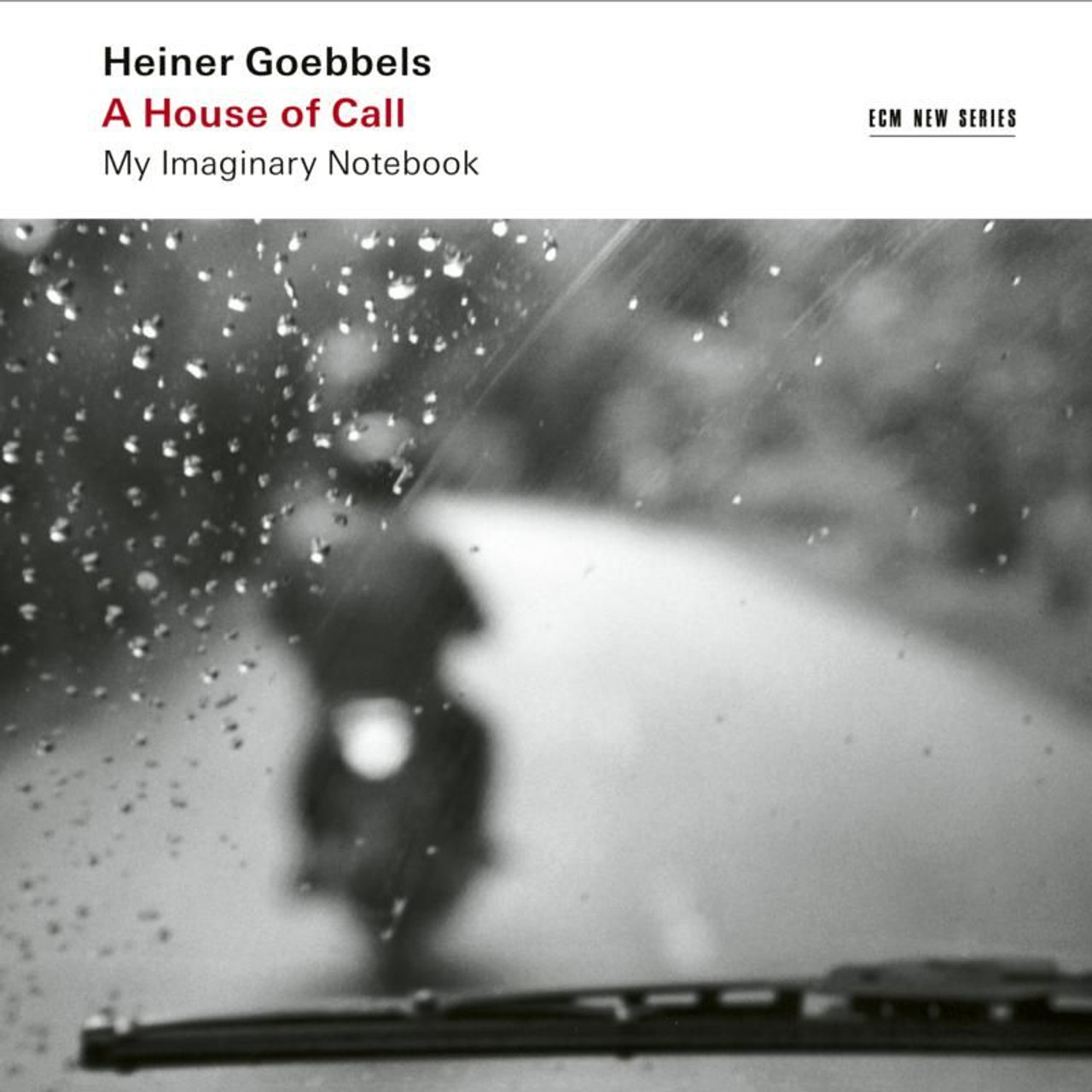
Heiner Goebbels, A House of Call, My Imaginary Notebook, Ensemble Modern Orchestra, Vimbayi Kaziboni


A recent two-CD release has gotten my attention and I am happy to write about it today. It is a long, ambitious four-part work for orchestra and historical recorded sound by Heiner Goebbels; it is entitled A House of Call, My Imaginary Notebooks (ECM New Series 2728/289 2-CDS). The music has a fine complexity and expressiveness that is generally characteristic of the best High Modern works of the peak period for such things, only passing time and Goebbels' encompassing grasp of our times means you can hear the most fired-up post-Stockhausenesque atonality alongside  Postmodern ritual depth and a definite reframing of some of the stylistic open and edgy Free Jazz demeanor.

It is a masterful work, very nicely performed and a surprise for its avant tendencies that one encounters less today on a label like ECM, so all the more welcome for that. The title suggests a line from Joyce;s Finnegan's Wake. This work is inspired by this and the novel as a whole, and John Cage's treatment of it in his Roaratorio. Beyond that Goebbels says it entails "a cycle of calls, invocations, incantations, acts of speech, poems and songs for large orchestra." But the idea as he goes on to explain is how the orchestra is confronted by the recorded examples of speeches and ethnic vocalizations such as African chants, Persian classical vocals, and etc. The orchestra responds in kind or resists and sounds sometimes slightly contrarian in response. Finally the work is an elaborate, brilliant juxtaposition of the two forces of sound, of voice and instruments. These stylistic variables come out of  the recorded vocals and their ethnic periodicity out of a local folk or local classical genre. So Persian vocal elaboration is matched by an complementary droning, then a complex synchronicity by the orchestra, then African repetition or grooving is complemented by a Postmodern riffdom, etc.

The hearing and rehearing of the work takes place within the special sound world the work sets up. There is nothing quite like it. It has a breakthrough quality that feels futuristic. Listen to it and give it your attention and I think you will find it as exhilarating as I did! A milestone this seems to me, See what you think.

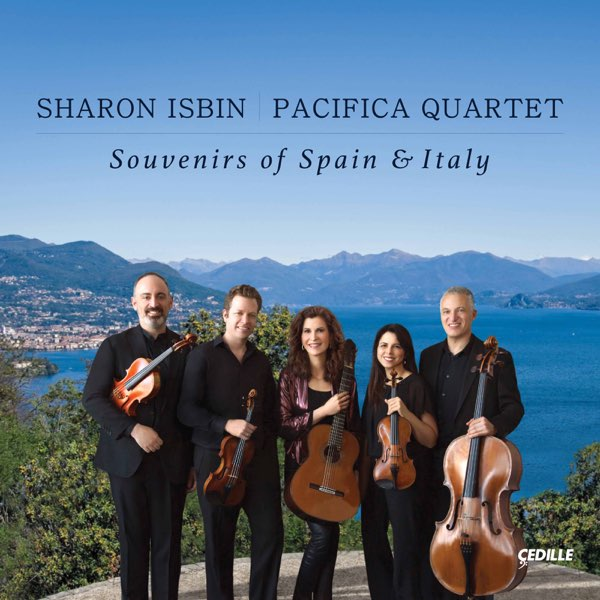
Sharon Isbin & Pacifica Quartet, Souvenirs of Spain and Italy, Guitar and String Quartet Music by Castelnuevo-Tedesco, Vivaldi, Turina, Boccherini


What makes the music of Spain and Italy so lively and expressive? One answer is that both countries had a period of enculturation with originally nonlocal peoples, the Moors and Arabs, and at least in Spain a pronounced Judaic influence as well. Today's post certainly bears out tha liveliness of the music on a very compelling album of music for classical guitar and string quartet, namely the Pacifica Quartet and guitarist Sharon Isbin play Souvenirs of Spain and Italy  (Cedille CDR 90000 190).

One key thing that makes this a winner right off the bat is the quality of the performances, with Sharon Isbin nicely on guitar and the Pacifica String Quartet presence as lively and as authentically dedicated as you might want to hear.

And another key is the beauty and intelligent choice of the repertoire featured in the program. So we have Mario Castelnuevo-Tedesco in a pleasant surprise with his less well-known "Quintet for Guitar and String Quartet," Isbin and Emilio Pujol's arrangement of Vivaldi's "Concerto in D Major," Turina's "La Oracion del Torero for String Quartet," and finally Boccherini's stirring  "Quintet for Guitar and String Quartet."

The music has such a detailed and vibrant feeling and demeanor and serves fully to flesh out the abundant talents of the artists on display here. There way be one or two works you have not heard much if at all, and then in the end it is all the more educational and rewarding to mix familiar and not-so-familiar works in these wonderful performances.

Ms. Isbin is a hearteningly lyrical presence on these erfoamcnes, matching the expressive brio of the strings and putting forward a joyful noise without fail. The simpatico stylistic fluency of the five artists brings the Spanish-Italian qualities to the forefront just as one might hope.

Recommended heartily for novice and seasoned listeners alike.You likely will find many hours of pleasure here as I am doing.