Search This Blog

Tuesday, October 18, 2022

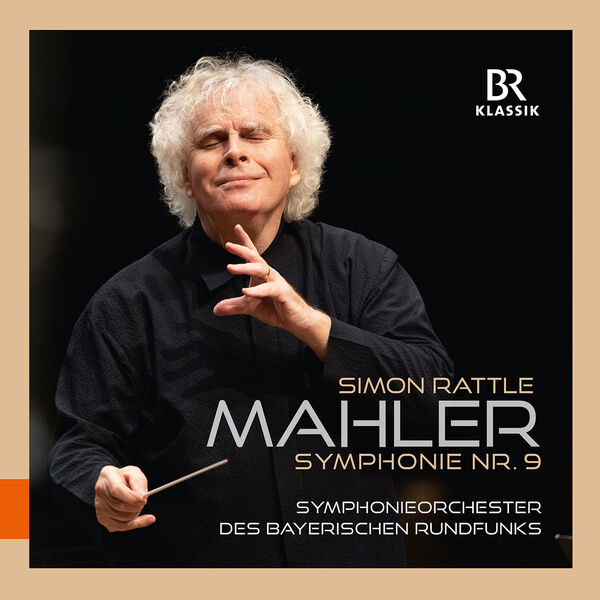
Mahler, Symphonie Nr. 9, Simon Rattle, Symphonieorchester des Bayerischen Rundfunks


The recent and happy release of Simon Rattle's conduction-interpretation of a live and lively Mahler Symphonie Nr. 9  (BR Klassik 900205) is an occasion for some rejoicing in my neck of the woods. My appreciation of the ten Mahler symphonies has roughly followed a chronological order with me, partly because that was the way I followed in my intense program of listens and coming to know the corpus over the years. It is also true for me at least that the latter symphonies I ended up with versions originally not particularly defining, at least for six and nine.

And here with this version of the ninth I am lifted aloft, thanks to Rattle's exalted, heady reading and the ready response of the entire Symphonieorchester des Bayerischen Rundfunks, strings, winds, brasses, everyone of necessity attacks each passage with detailed feelingful presence, which Mahler in his Viennese exacting professional and recall modes demands and ever has, surpassing the expressive limits of what came before him, maybe more so in the latter that in his earlier works? And we are right in supposing that a definitive performance requires all the synthesizing that orchestral Vienna originally began to presuppose. It is as if Rattle and the orchestra were recalling the symphony lovingly from some past which of course necessarily the music has dwelt within, and now we have it all unveiled for us in dazzling silhouette for this recording. Rattle here sometimes makes the orchestra into a personal piano, into a 100-member rubato expression.

I see in my search for the cover image on Google that there have been a number of records by Rattle of the Ninth. After hearing this wonderful version I must say I might well like them all, might want to hear the lot of them for sure. But what matters in this live reading is the monumental wholeness of balanced and specially expressive presence of all the Mahler wrote out in brilliance for the entirety. It is not the "strings plus rest of orchestra ornamenting" that might comprise the assumption of the pre-Mahlerian orchestrations out there all too often. It is the epitomizing expressions of each section and parts of sections with the full congruity and depth of musical being that makes of it all a beautifully rewarding reading.

In the course of this fabulous performance we begin to understand fully the lucid expression Mahler gives to us of his lifeworld as looking back, in a kind of gently, then assertiveuvely yet still then decidedly melancholy reverie. It is a testament to the full vision of Rattle and his successful realization and the wonderfully responsive articulation of the parts by each in the orchestra, and finally the equally brilliant engineering-production of this live recording so that each part is faithfully reproduced in an exuberant fullness of balance. I have never heard such a performance of this ninth. Now I think I understand the greatness of the work as Mahler might have wished us to be experiencing it today!

Do not miss this one!

Tuesday, October 11, 2022

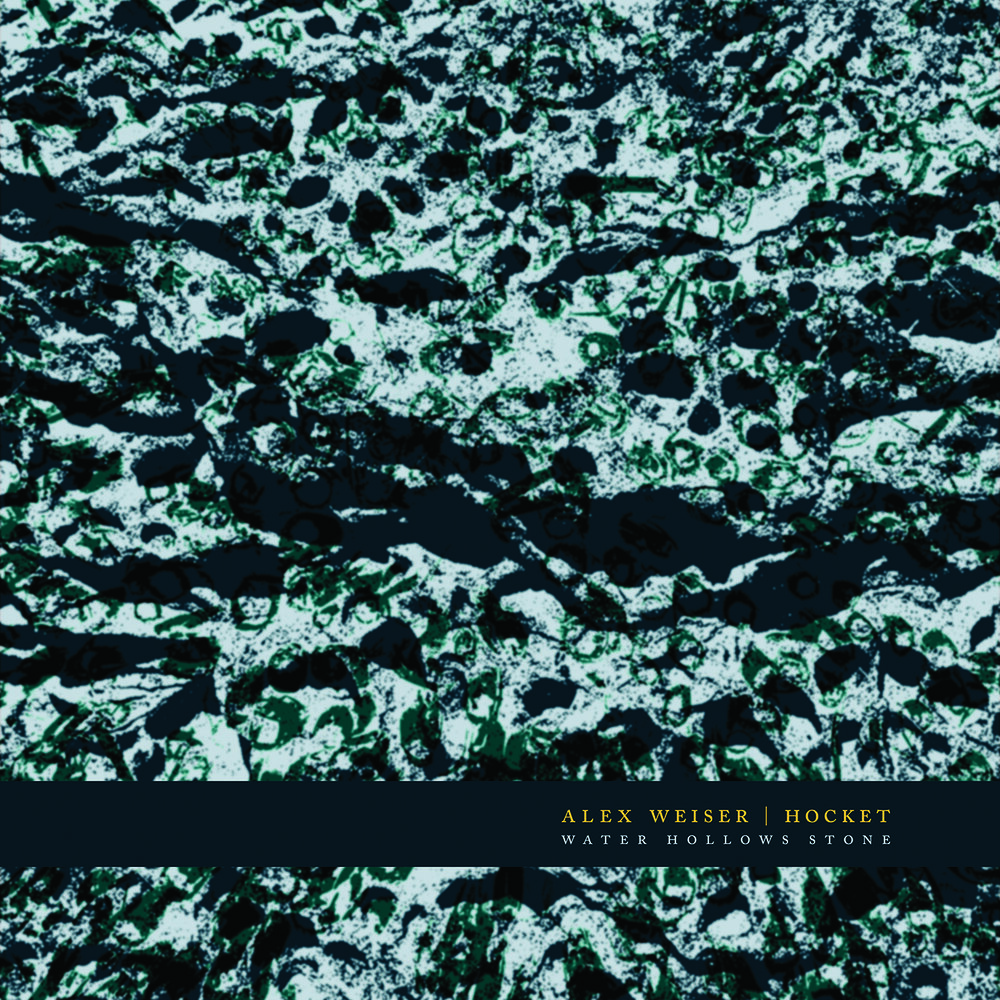
Alex Weiser, Hocket, Water Hollows Stone


In the realm of New Music EPs, a twenty- or thirty-minute romp into new territory is a good thing for explorers of the musical arts. You get to hear something and decide what you think without an eighty-minute ordeal, potentially. So today we have such a thing, the music of Alex Weiser as played by the Hocket Duo (Bright Shiny Things BSTC-0176), the two-piano tandem of Sarah Gibson and Thomas Kotcheff. The present-day experience of the Contemporary on disk has as the first challenge to discern what it is you are about to or already are listening to, from graphic design conventions nowadays that emphasize visual aesthetic over comprehension, and there are maybe reasons for this that need not interrupt the survey-review of this program. Virtually all releases have gone the way of design singularity and I will not waste any more time here, except to be thankful for PR folks who provide a key to it all via press sheets!

On the back cover of the CD Weiser gives us the central thought behind all here. It comes out of encounters he had travelling through New York's Bryant Park subway station. Oddly enough (I missed this in my travels years ago) etched on the tiles of the walls there is a quote from the ancient Roman poet Ovid in Latin! Weiser unpacks it--water hollows stone bit by bit, accomplishing the seemingly impossible via a lengthy process facilitated by the gradual drip of long time, in interesting ways something of what Anthropologist Marshall Sahlins called "structures of the long run."

So Weiser on the back cover ties the aquatic process into the musical one, noting how a drip of water like a single musical note has no real power except in the continual process of its re-presentation. The music by its continual presence, repeating and moving forward, creates a force unknowable except in its processualizing. This uncanny temporal transformation in the composer's words, gives rise to "something that has the power to move is and change how we view the world." We might recall early Steve Reich works and how the emphasis too was on process, on gradual development and change over a relatively long time, on an instantiation only possible in the re-presentation.

So Weiser has created "Water Follows Stone," and following it giving us a punctuation in the terminus of "Fade." The two piano works enter the swim of time and life and introduce us to a kind of metonymic modeling of sound to analogize the water's long term changing ability. The movements "Waves," "Cascade" and "Mist" each devote note deliberation to different processual ends. 

So "Waves" models a primordial maelstrom of darkness and void that transforms to the presence of creative waters in motion. 

The ensuing "Cascade" is based on a misquotation of the 19th of Beethoven's Diabelli Variations, and a wonderful flowing thing it is, representing and suggesting the rise of civilizations, a "combination of imperfectly remembered models and innovation that results in a distinctive new character." And so it does this with musical sequences that are rather arrestingly compelling.

The final "Mist" borrows an idea of composer Helmut Lachenmann, to release notes from a given chord singly and consecutively to emphasizes the utterance of sounding as well as the eventual decay in time.

The point of it all ultimately of course is to give you a fantastic listening experience. I find it so. Listen to the flow and gradually you will find in time you are part of it, you are in it and of it. Recommended. Give it a good listen by all means.


Tuesday, October 4, 2022

Leo Brouwer, Cuban Sketches for Piano, Mariel Mayz


Because of the nature of politics and history, where you are situated sometimes has something to do with when and how you come to know some composer, some music. So the fact that Leo Brouwer is Cuban means his music was not always flowing into our ears here in the US in years past. I am not here to delve into that fact so much as to acknowledge it. So the advent of Leo Brouwer here has not been a steady factor, and so sometimes we finally get to hear some things in greater depth than we have previously. That surely is a very good thing. Accordingly I find myself appreciating his originality more and more as I dig deeper into his output.

So happily we have right now the release of significant Leo Brouwer piano works with an enthusiastic and care-taking, indeed a rather definitive performance by pianist Mariel Mayz. That is namely the full length Cuban Sketches for Piano (ZOHO  ZM 202206). Now I should point out that the sum of the program is what is being entitled here, so really we are talking, and quite happily, about "Diez Bocetos" and then "Nuevo Bocetos para Piano" (3), and then further a Maiz arranged "An Idea (Passacaglia for Eli)" and then finally Maiz' own "Variations on a Theme by Brouwer."

And as you listen you may find the occasion to revel in the idea that Brouwer here is neither exactly fully "Modern" nor is he determinably "unModern." The music has the contemporary tang of the 20th century but then he goes his own way in a lyrical and inventive melodic-harmonic individualism that is in a league of its own. Yet too the "Nuevo Bocetos" do channel a more consistently Modern palette to a greater extent that the others. Nothing is wholly a monolith nor is it exactly all wholly Cuban in some obvious sense, at least not very often.

So we hear the not easily categorized flow of these piano works and find a great deal to appreciate, or at least I do.The performances give much in an imaginative making so, a very sophisticated and subtly lyrical reading that stands out as something even Goldilocks would find satisfying. I recommend this one warmly, wholly. It is one to savor over one hopes the many hours and years of listening ahead.

Monday, October 3, 2022

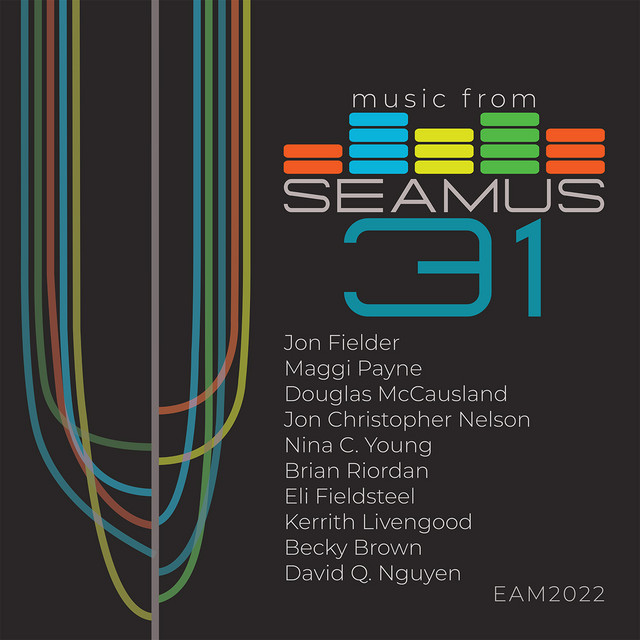
Music From SEAMUS 31, New Electro-Acoustic Music 2022


The Society for Electro-Acoustic Music in the United States (SEAMUS) has done a great deal in the decades of its existence to forward the art and help get the word out to listeners. The annual SEAMUS selection of new Electro-Acoustic works define by its presence the US scene as it has now for 31 years. In any given year the density of the offerings can vary, but Music from SEAMUS 31 (New Focus Recordings CD) has a pleasing wealth of invention high by any standards.

This anthology sports some nine new works by composers not exactly household names. Two things stand out to me as I listen. One, that we need to appreciate what the digital world has given composers in electronics and transformed acoustics. The analog world had and has charms, of course. But the ease of editing and collating on the digital palette ideally leaves more time for composers to work out fully the sound color landscapes that center the music in vibrant imagination. You hear that nicely here. The sounds are rich, gorgeous at times, with a depth of field and clarity the medium now allows virtually as never before.

The second thing to note as you listen is the new dexterity that one hears in how composers can manipulate and extend vocal acoustics, both as transformed within realistic timbres, and also as artfully aural transformations passing out of our customary real-world sound.

And as you listen a few times you start feeling the pleasure of recognition--you increasingly get inside and understand intuitively the complex and elaborate structures, the almost lascivious pleasures of aural expansion.

This is the nicest, most interesting SEAMUS anthologies I've heard in a while. Do explore this if you want to hear the directions things are going in these days, or even if you have no idea about Electro-Acoustics and want to sample from a rich stream of possibilities over time. Here is what is happening now. Bravo.

Tuesday, September 27, 2022

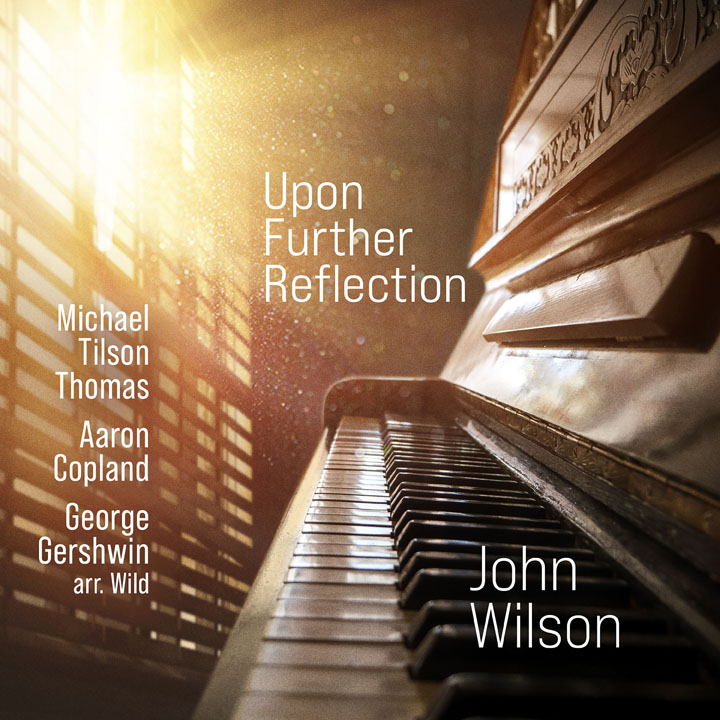
John Wilson, Upon Further Reflection, Piano Works by Michael Tilson Thomas, George Gershwin-Earl Wild, Aaron Copland


Americana is a term applied to mostly North American composers, mostly in the 20th century, with music that has a pronounced vernacular tinge, Jazz, Country, Folk, etc. The term Nationalism has been used in the Classical worlds to denote that similar trend in various countries and locales from  the late 19th century onwards. Because it simultaneously denotes a political-cultural stance that has historical associations with fascist definitions of monolithic hegemony it may be better discontinued for some alternate descriptor?

Well this is not the place to go on further about terms and etc. We do have a very lively and enjoyable album however in the Americana category with pianist John Wilson's Upon Further Reflection (Avie AV2458). It covers a judicious yet brief sampling of things familiar and less familiar, played with care and kinetic power throughout.

There are nice surprises and assuring confirmations to be heard. Of the former, the world premiere recording of Michael Tilson Thomas's "On Further Reflections" is a big, gainly, sprawling success in its High Modern Blues inflection, with a goodly amount of virtuoso pyrotechnics that never seem gratuitous so much as they are driven by the organic dynamic of it all. And then the middle movement has a brittle bittersweet lyrical matter-of-factness that spells the work and provides a kind of island of difference. I will admit I had no idea what to expect since I have scarcely heard his compositional output. I was happy to find it all convincing and very well wrought. Bravo!

Earl Wild's "Virtuoso Etudes After George Gershwin takes some wonderfully alive Gershwin song forms--The Man I Love, Embraceable You, Fascinating Rhythm, I Got Rhythm, etc.--and brings to them a blistering, sparkling torrent of pianistic energy that sounds great in Wilson's hands.

The Aaron Copland Piano Sonata is not familiar to me but turns out to be a modern expressionist gem of chordal and melodic engagement one can come to expect when Copland is edging to the side of abstract purity. It has the tasteful tang of complex dissonances that place it squarely in a then ultra-Contemporary mode. And it suggests the momentum of Americana rooted strains without especially referencing anything directly. And it stands out as a work one hopes other pianists will turn to more often, since it well deserves a wide hearing most certainly. I am rather astonished that I never really heard this major opus before,

In sum this is some wonderfully adept pianism and John Wilson has complete command of it all in spite of its considerable demands. Strongly recommended.

Monday, September 26, 2022

Beethoven: The Symphonies, Chamber Orchestra of Europe, Yannick Nezet-Seguin


When I was coming of age as a serious follower of things Classical I naturally found my way to Beethoven's glorious symphonies, at first a fine old reading of his Eroica by Leonard Bernstein in the Music Appreciation Series that came out I guess in the late '50s. From there it was Bernstein and the NY Philharmonic doing the 9th and so on, culminating in the complete symphonies on a box set as the NBC Orchestra conducted by Toscanini--renditions of great passion and fire but at times acoustically  challenged in their primitive audio qualities. I most naturally fell into hearing other versions of most of the nine but never another complete set. 

Nonetheless what a treasure trove it all has been for me over my life. The great depth of the Eroica, the human triumph of the Ninth, the beautifully prototype of the Romantic nature symphony of the Pastoral 6th, there is an unparalleled adventure of the nine in sequence, and symphonic composers thereafter too as a kind of paradigm, perhaps they never quite overcome the startling brilliance of the Beethoven but they did successfully create parallel swarms of symphonic bliss when all went well.

And the Toscanini recordings helped define the 20th century vision of it all, on recorded media: a rather large orchestra and hugely big and emotive explosions of sound at their peaks. The revolutionary 3rd, 5th, 6th, 7th and 9th were what conductors and orchestras of note expended the most attention on, and of course for good reason. Yet one could also open to the real charms of the 1st, 2nd, 4th, and 8th, but if it were a matter of large and fire-y explosions these were not the very best place to find such things.

Skip ahead to right now, and a new recording of the complete symphonies by the Chamber Orchestra of Europe as conducted by Yannick Nezet-Sguin (Deutsche Grammophon 486 3050 5-CDs).

As for conductor Yannick Nezet-Sequin, type his name in the search box above for some nice programs he has conducted recently. He is a meticulously accurate yet spirited exponent of the symphonic repertoire as I have heard him so far. But that did not necessarily prepare me for what comes to us with the Chamber Orchestra of Europe and Nezet-Sequin taking on the nine Beethoven symphonies.

First off of course is the chamber symphony quality of the nine as realized here. The lesser number of strings puts everything into a new balance, as indeed the master composer must have been intimate with in a normative performative situation. Perhaps indeed this is how he initially heard the music in his head and in the concert halls. The woodwinds naturally come up in the balance, forming more of an equal partnership with the strings. What that does to the 1st, 2nd, 4th, 6th and 8th at least as focused in on here is a set of works that turn out to be innovative and revelatory less in terms of being Late Romantic in potentia as rather being Late Classicist taken a step further. The melodic peaks in both these and in the blockbuster 3,5,7, 9 symphonies have a new lyrical edge that puts the balance less in fire than in fire and warmth, so to speak. There can be a wonderfully brisk quality to some movements that comes together very impressively in the symphonies we have paid less attention to, but also a wonderful Pastoral that reads more coherently, and then shifts the emphasis on the blockbusters as well.

So for example the funeral movement of the Eroica or the scherzo of the Ninth both have a new poignancy and we can hear lots of other wonderful moments when we close listen to it all. Nezet-Seguin deserves most of the credit for knowing how to bring out the new emphasis and balance in these chamber orchestra readings, but of course kudos are in order for the orchestra itself as well.

I could wax on about each of the symphonies and how the performances here differ from a typical 20th century reading, but it all applies in various ways so the best impression to be gained is to listen to it all yourself, of course. I suspect nearly everyone who loves this music will benefit from hearing these versions, but too it is a good place for the novice to start as well. It capitalizes on what the early 19th century perhaps assumed in performing these wonders. but then perhaps this kind of reading also speaks fully to where we may be musically in the new century.

Make note that these performances are all from the "urtext" that has been constructed in each case in the new Beethoven Complete Edition. So all the more reason to appreciate the results!

I do not hesitate warmly to recommend all of this to you. It is a triumph in every way. Molto bravo!

Thursday, September 22, 2022

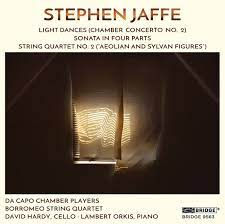
The Music of Stephen Jaffe, Volume 4, Light Dances (Chamber Concerto No. 2), etc.


All across the musical planet we live on today, in the world of Classical music there are living composers galore, lots of them and not surprisingly many excellent ones, with some, maybe most not getting wide social recognition. I try to cover the ones I like, though it is not exactly helping my statistical readership ratings by posting on relatively lesser knowns. A Beethoven post naturally might as a matter of course boost my ratings. Because as a midwestern concert goer reacted in the late 1800s and the introduction of Beethoven to ordinary folks, he wrote "some kinda music!" I've posted on Beethoven here because I love him as much as anyone, and new ways of hearing, of performing, new attention to his various periods, all are good things that continue to have relevance to us all.

Bur today we need to consider another name new to us, some of us, someone who in his own way writes some rather special music. I speak happily of one Stephen Jaffee, born in 1954 and very much a living voice. I was glad to be able to hear Jaffe's recent Volume 4 of his multivolume series, The Music of Stephen Jaffee, Light Dances (Bridge 9563). On it we have some three chamber works that strike me as uniquely triumphant, not necessarily novel in avant terms but then nevertheless exceptionally well expressed, sublime originals that carry into my listening as something vital, alive.

The works stand out in their vibrant rhythmicality, their tone color originality, their harmo-melodic avoidance of cliche or dependency upon fashionable phrases in currency. 

So we have a good variety of configurations in the "Light Dances (Chamber Concerto No. 2)," as ably performed by the Da Capo Chamber Players, the "String Quartet No. 2 (Aeolian and  Sylvan Figures)"  by the Borromeo String Quartet, and finally the "Sonata in Four Parts" with David Hardy on cello and Lambert Orkis on piano.

I do recommend this without hesitation for the New Music adventurer. Jaffe has a way about him that is unmistakably memorable and individual.