Search This Blog

Monday, October 15, 2012

Barber: An American Romantic, Conpirare and Craig Hella Johnson

Romanticism in music never had just one form. Beethoven was very different from Schubert. Both were different from Franck. So to call Samuel Barber a romantic is not to say that he was a member of a one-dimensional stylistic coterie. His romanticism was not of the giganticist sort--no thousand member orchestras, no three hour operas. He thought in rather modest ways, with more or less modest resources. And his music was very much his own.

And that wholly original quality is most evident in the new collection of choral works at hand, Barber: An American Romantic (Harmonia Mundi) by Conspirare, directed by Craig Hella Johnson.

This is a wonderfully performed anthology of works well known and lesser known, from the haunting "Agnus Dei" to two world premieres: a new version for chamber chorus and orchestra of Barber's "The Lovers" with poetry by Pablo Neruda, and a new version of "Easter Chorale," both reworked by Robert Kyr especially for Conspirare.

All reflect the very individual sensibility of Samuel Barber at his best--a singing lyricism, a tenderness at times and a singularity of line and overall sound, not lush, a bit more restrained in its passion, but empassioned nonetheless, expansive in compact ways, paradoxically.

Conspirare does a beautiful job with the scores. This is a full disk of masterful Barber, something one should not miss.

Friday, October 12, 2012

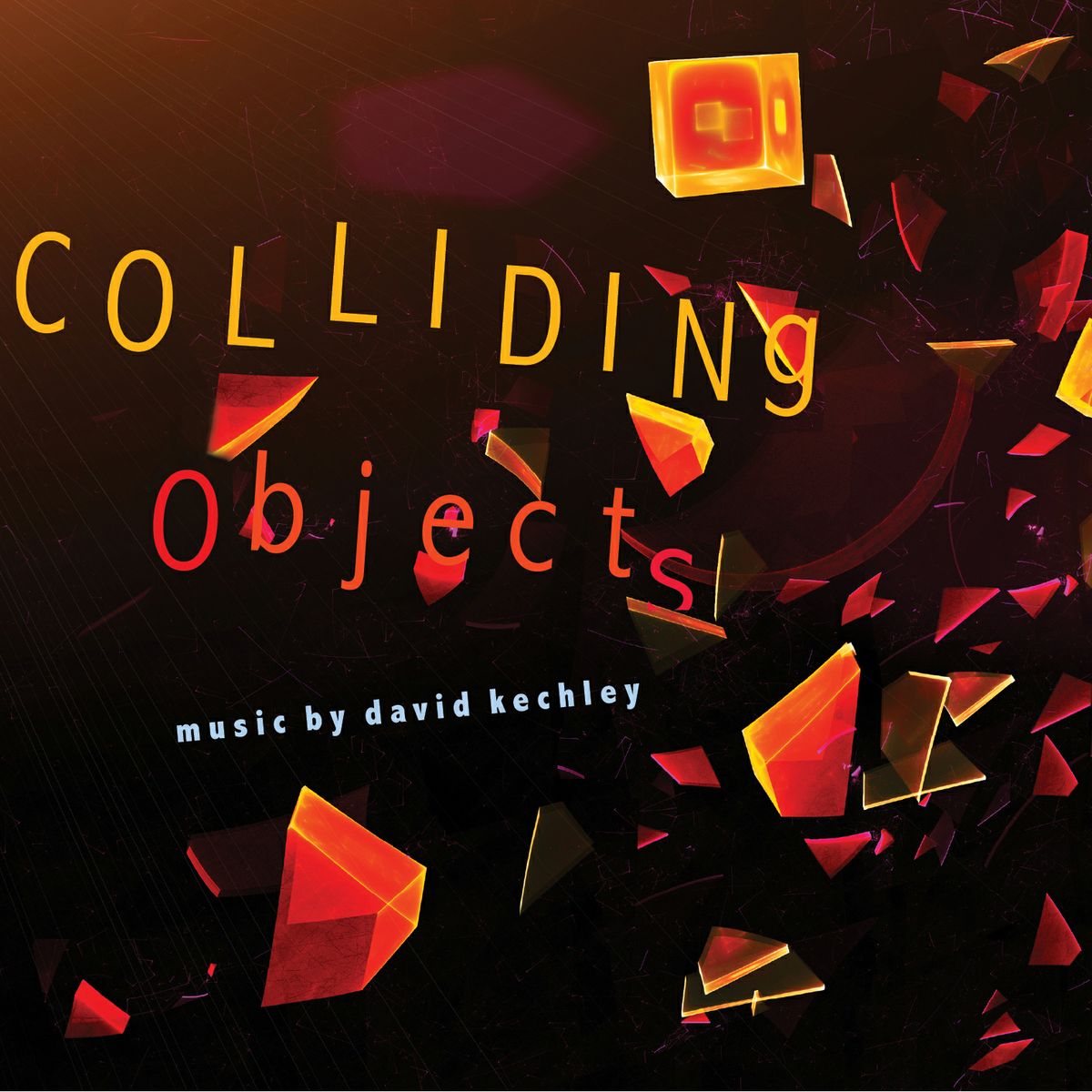
David Kechley, Colliding Objects

Composer David Kechley presents four chamber works spanning the period 1982-2011 on Colliding Objects (Innova 829). It's angular, pulsating contemporary music with percussion often an integral part of the proceedings. Saw and pine boards enter the mix in "Design and Construction: Trialogues for Trumpet, Saxophone and Percussion" but mostly it's the more conventional barrage of instruments at hand.

"Dancing" is the only all-percussion work, for four players and forty-four instruments. "Available Light" is the only percussion-less work. It centers around flute and harp. In middle ground are "Untimely Passages" for marimba and flugelhorn, and the title piece, for piano and percussion.

Throughout Kechley shows how infectious rhythm and straightforward melodic arches can make for music that is both contemporary and accessible. It's music that gets attention without sacrificing musical substance.

Thursday, October 11, 2012

Mozart, La Finta Giardiniera, René Jacobs and Freiburger Barockorchester

Never underestimate Mozart juvenilia. Take the full-blown opera La Finta Giardiniera, written in his teens. I found a version of excerpts at a thrift store years ago. To begin with, it was a budget disk in all the bad senses. Undistinguished cast with undistinguished orchestra in an undistinguished recording. In a word, it was crummy. I listen dutifully. My impression was that the opera was...pretty crummy. For years I listened now and again, but couldn't shake the impression that it wasn't up to snuff.

René Jacobs and Freiburger Barockorchester have released a full version (Harmonia Mundi) that I have had the pleasure of hearing several times. What a difference! It's given the full period treatment, right down to an early pianoforte for the recitatives and a harpsichord for the arias and other numbers.

This is music that is fully worth our attention. It may not have the profound depths of Don Giovanni, but few operas do. It is fully charming, fully Italianate, a little like listening to early Rossini.

The cast and orchestra do a worthy job of it from start to finish. This is a version that will make you take the opera seriously. It is like finding a lost Mozart work! All Mozart opera buffs will love it, I expect. It is a joy to hear.

Wednesday, October 10, 2012

Maurice Steger, Una Follia di Napoli

If you were a music lover in Naples in 1725, you no doubt would have been privy to the tremendous buzz created by the visit of J.J. Quantz, then the best known flute virtuoso of his time. The visit spurred on the composers in town to produce a spate of concertos and sonatas for flute, which were preserved in a Napolian collection from that date.

Maurice Steger, wonder of the recorder, directs an eminently authentic and exciting ensemble in a series of lovely compositions from that collection in Una Follia di Napoli (Harmonia Mundi) which is out this month.

There are works by Alessandro Scarlatti, Domenico Scarlatti, Leonardo Leo, Francesco Mancini, Francesco Barbella, Nicola Fiorenza and Domenico Sarro, perhaps not all familiar to us today, but solid baroque craftsmen-artists all, writing music of great verve.

In the hands of Maurice Steger and his ensemble, there is a period authenticity and tremendous vitality to the music. Steger is a master and the ensemble is superb. This is baroque come alive with all the charm and energy it can exude. Bravo!

Tuesday, October 9, 2012

Yvonne Troxler, Brouhaha

If you want your music performed regularly and with care, it's never a bad idea to form your own ensemble. That's what Yvonne Troxler did in 2000. Glass Farm, as named, is still going strong and both the ensemble and her work are well represented on their second Innova disk Brouhaha (Innova 835).

The CD gathers together five of her recent chamber compositions: "Penn 1," "Shergotty," "Brouhaha," "Susurrus," "Kaleidoskop." All occupy modern territory with their own integrity. Most importantly, Ms. Troxler has traveled along her own path and found her own voice, in music that doesn't lack passion but seeks to explore sound and note parameters with originality. Classical high modernity lurks in the background as the trunk from which she branches, and the growth is strong and healthy, so to speak (pardon the mixing of metaphors). I especially like the agitated excitement of "Kaleidoskop" and its well thought-out interplay between voices.

Troxler shows eloquence, memorability and inspired craftsmanship in this round of chamber works. Glass Farm is a superior performance vehicle that excels in realizing the music. That's a terrific combination and this album brings lots of pleasure!

Monday, October 8, 2012

Andrew Violette, Sonatas for Cello and Clarinet

Andrew Violette didn't make a pact with the devil before he produced his Sonatas for Cello and Clarinet (2011) (Innova 832), but he may have engaged in some extra-spiritual scrimmaging on the astral plane with Ives, Messiaen and Hindemith before he penned the sonatas.

It's not that he is imitating any of them. No. But his use of chromaticism, bi-tonality, atonality and juxtaposition of vernacular with avant garde elements owes something to the way they proceeded compositionally, all things considered.

That is not to take away from Andrew Violette's musical personality, which comes through with strength and originality on these pieces. It is only to suggest that he belongs in a lineage that has these three composers as forebears.

We get eight brief to relatively brief movements for the Sonata for Cello and Piano, played by Ben Capps on cello, one long movement for the Sonata for Clarinet and Piano, with Moran Katz on clarinet. The composer tackles the piano part on both sonatas. The performances are very lively and match the expressiveness of the music squarely and vividly. These are players at the top of their game, playing music that suits them well.

And the music is quite engaging. It is filled with a very individual quality, and has a presence and melodic dynamic that is unforgettable. Here we have two modern gems from a formidable composer of today. Those with contemporary ears, take heed!

Friday, October 5, 2012

Smetana, The Bartered Bride, Jiri Belohlavek, BBC Symphony

Like most kids of my generation, I first encountered Smetana through the Overture to The Bartered Bride. It seemed like exciting music to me and I eventually found my way to Ma vlast and the full operatic version of The Bartered Bride on an old Turnabout set. I still enjoy the music today and I perked up at getting the chance to hear a new version of the opera by Jiri Belohlavek and the BBC Orchestra (Harmonia Mundi).

It's a beautifully crafted version with orchestra, chorus and soloists in good form. The sound is excellent. It has great spirit. I haven't heard every version of the opera in recorded form, but this one seems all that it should be!

Now I wonder if the Overture is still a part of music appreciation classes for kids these days?

The set hits the States this Tuesday, October 9th. You can pre-order it at Amazon by copying the following URL and pasting into your browser: http://www.amazon.com/Smetana-Bartered-BBC-Symphony-Orchestra/dp/B007X98RJ2